Claude Code & Codex.
From your phone. No babysitting.
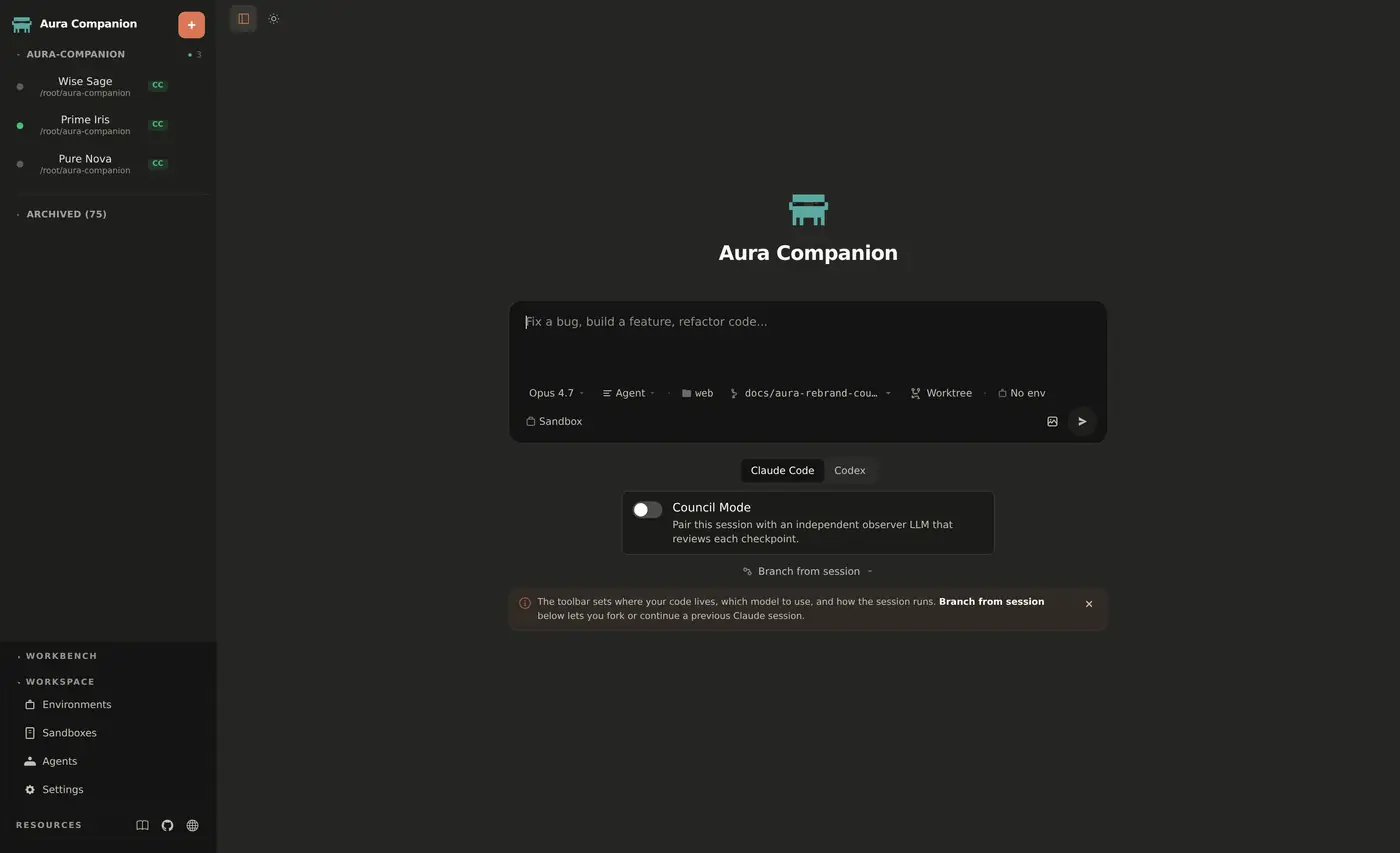
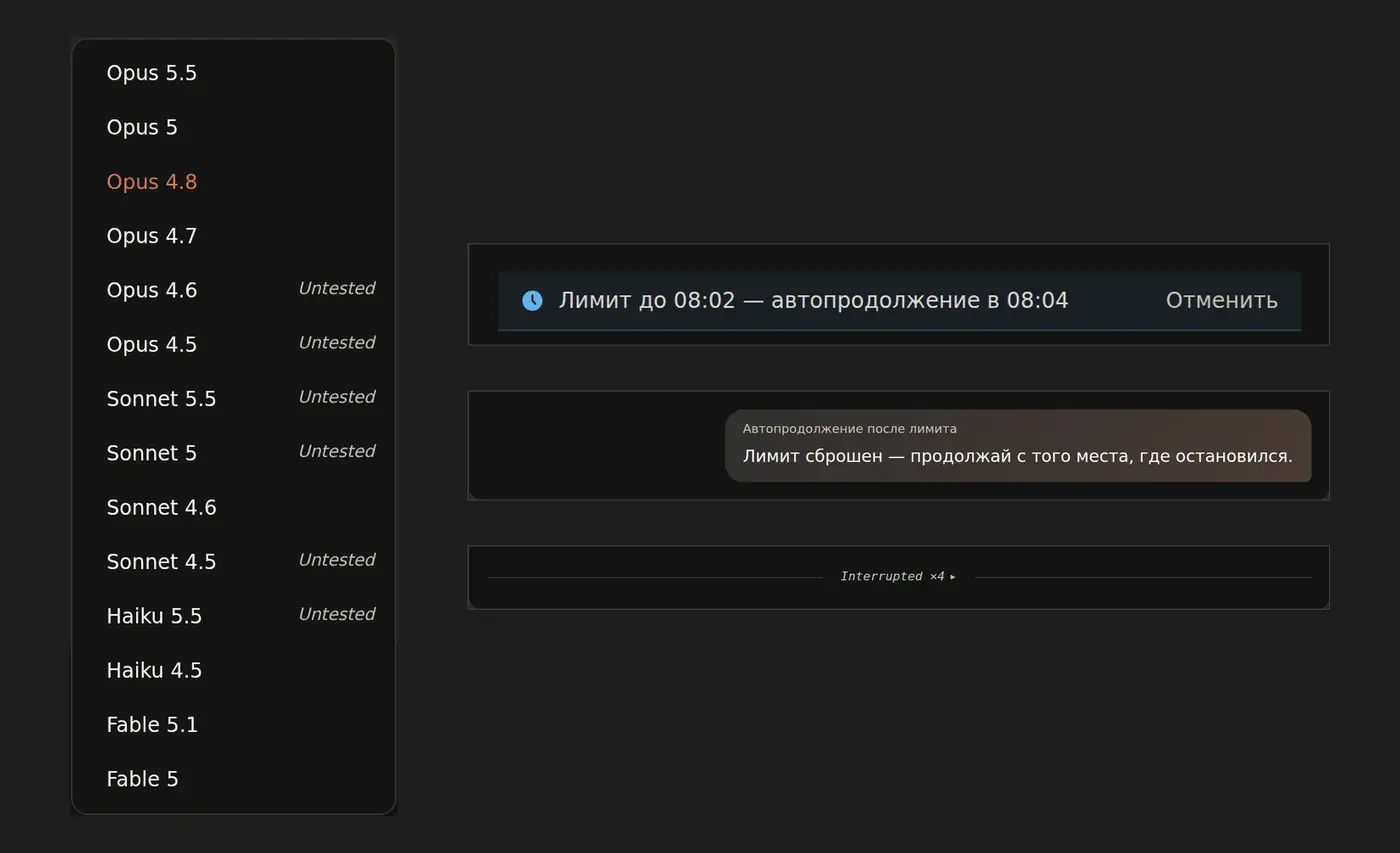
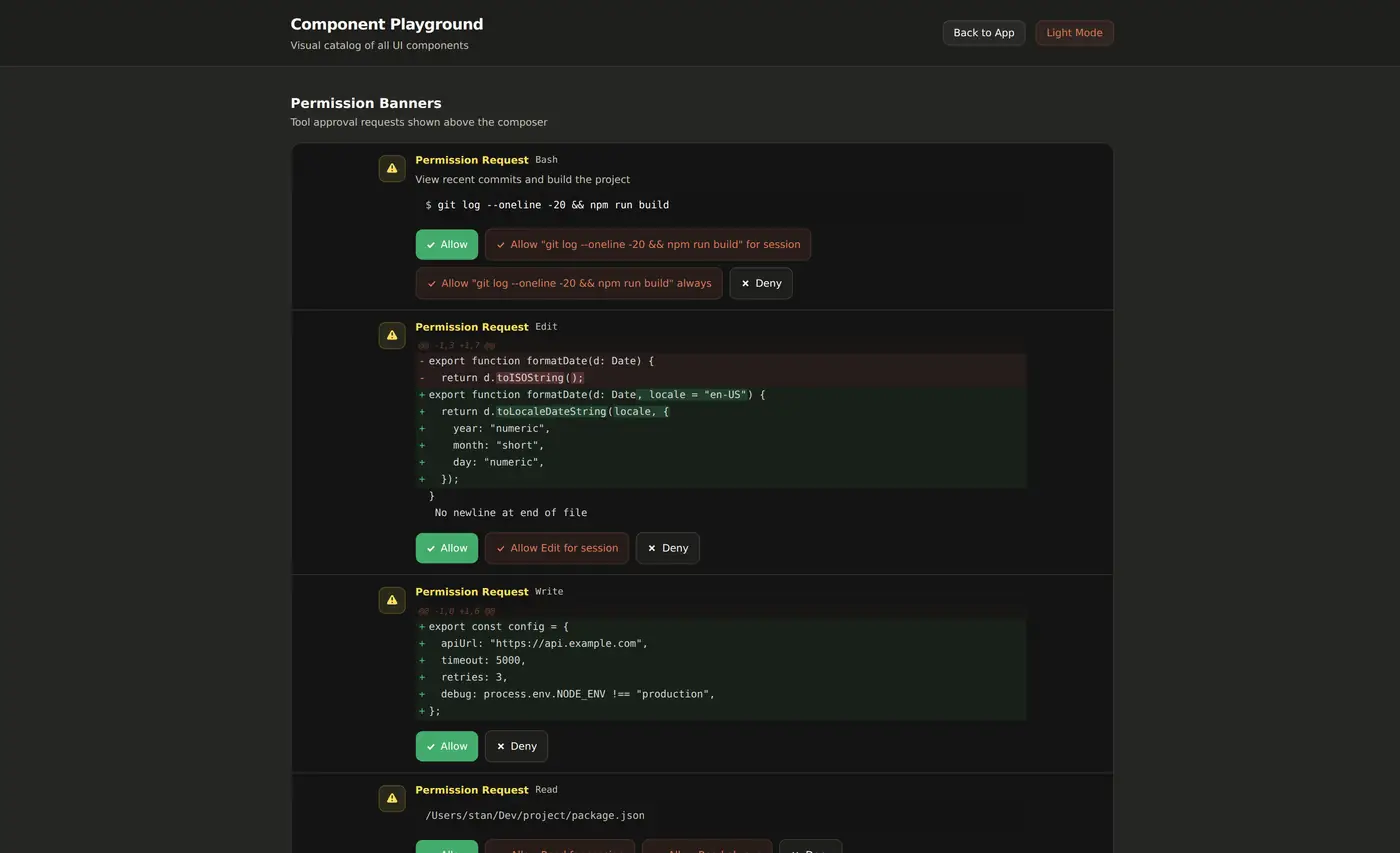
A web UI for the official Claude Code and Codex CLIs: your agents keep working after a usage limit, review each other, and don't lose replies when the server restarts. Run several projects in one window, from any browser — including your phone. Free, open source under MIT. Also works from Russia, Belarus, Kazakhstan and the rest of the CIS without a VPN.
Why not just use Claude Code? →
For everyone
Describe a task in plain words, get a result. Use ready-made advisor systems (like RazumAI) or work on your own tasks directly.
For vibecoders
All the code and all the skills, free under MIT. Run your own Aura instance and Claude Code, Codex and all 29 skills work right inside your codebase.
For tinkerers
MIT-licensed — take it and host it yourself. Or hand the repo link to Claude and let it set everything up for you.
Why, if you already have Claude Code and Codex?
Short version: Aura doesn't replace them and doesn't make the model smarter. It removes the friction around the agent — usage limits, hangs, restarts, being away from your laptop — and adds a second opinion from a different model.
Aura doesn't replace them
- It runs the official
claude/codexCLI unchanged: your CLAUDE.md, skills, MCP servers and chosen model work exactly as they do now. - No hidden prompts injected by default — the knowledge base loads only when you ask for it.
- It doesn't rewrite the start of your prompt: our prompt-cache audit shows a 97.5% cache hit rate.
- Close the tab and it's the same Claude you have in the terminal. No lock-in: uninstall Aura and your Claude Code setup is untouched.
What Aura does not do
- It doesn't make the model smarter. Same Claude, same Codex.
- It doesn't come with a subscription — it runs on your own Claude or Codex plan.
- It's not a magic button. It's an interface and a safety net around the agent, not a new agent.
Three concrete jobs
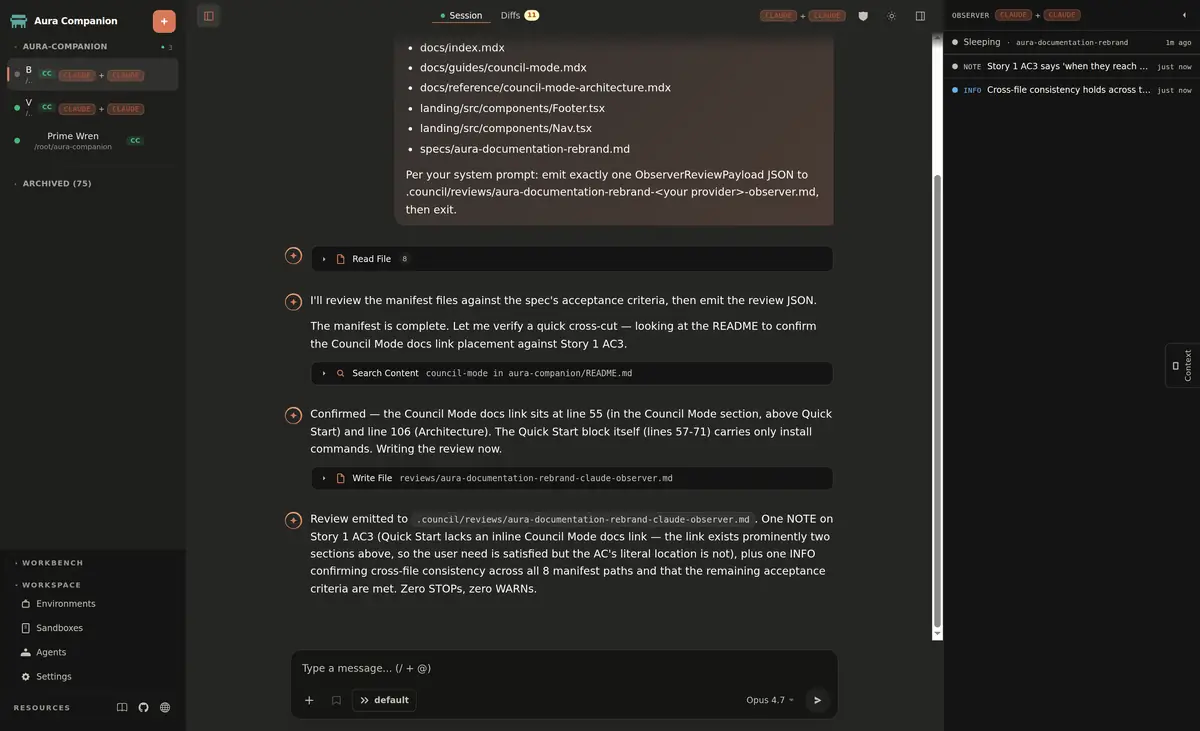
- limit hit at night → work already resumed by morning;
- Codex catches a Claude bug before the commit;
- server restart → sessions still there, all visible from a phone.
"Easier to build my own?"
Honestly — yes, you can. Aura is what you'd end up with after about three months. We've already stepped on the rakes: lost replies, hangs, usage limits, restarts.
It's MIT — take just the methodology (skills, Council, knowledge base) or the whole thing. View the code →
Try it — no sign-up
No account, no forms. You need Bun and a logged-in claude or codex:
$ bunx aura-companion
→ http://localhost:3456
Runs on your own Claude / Codex subscription. Nothing is installed globally; data lives in ~/.companion and is removed with one command: rm -rf ~/.companion.
Real projects — already live
Aura Companion isn't only a developer tool — it can be the foundation for whole platforms. Here's a live example of what's been built on top of it.
Razumai.space
A system of several dozen advisors for life and self-discovery — from psychology and relationships to business, finance and parenting. A whole platform for meaningful conversations, in Russian.
At its centre is MetaPersonaGPT, the most capable advisor in the set. From a single conversation it types a person across 27+ systems: MBTI, socionics, Big Five, Enneagram, psychosophy, temperaments, Jungian archetypes.
A live community has grown around Razumai — "Synergy of Mind" on Telegram.
MetaPersonaGPT
Types a personality across 27+ psychological systems — Razumai's flagship
Life path
Direction, values, choices
Relationships
Family, partner, children
Business
Strategy, negotiation, growth
Finance
Budget, savings, investing
What's inside Aura Companion
Three skill families that work together: knowledge accumulates, design gets sharper, an engineering council catches mistakes. After each session the system writes its takeaways to memory — over 2+ years that has grown into a base for working with almost any stack, especially Telegram bots, landing pages and web apps.
Self-Learning
/primeLoads the relevant knowledge/learnCaptures an insight mid-session/self-reflectExtracts lessons at the end of a session/evolvePromotes patterns into rules/review-with-kbReview informed by what's been learned
Carmack Council
1. /spec-writerSpec: Job Stories + Gherkin acceptance criteria2. /council-planExperts plan the feature — no code yet3. /council-implementBuilt task by task, verified after each one4. /council-reviewExperts review the code in parallel (Fowler, Beck, Hunt, Willison…)5. /test-architectTest audit and spec, following Kent Beck's principles- after every session — takeaways written to the system's memory
Design & UX
/frontend-designProduction-grade UI/animateMicro-interactions/auditAccessibility audit/polishFinal quality pass/hardenError handling and edge cases- …and 13 more
Two AIs. One catches what
the other missed.
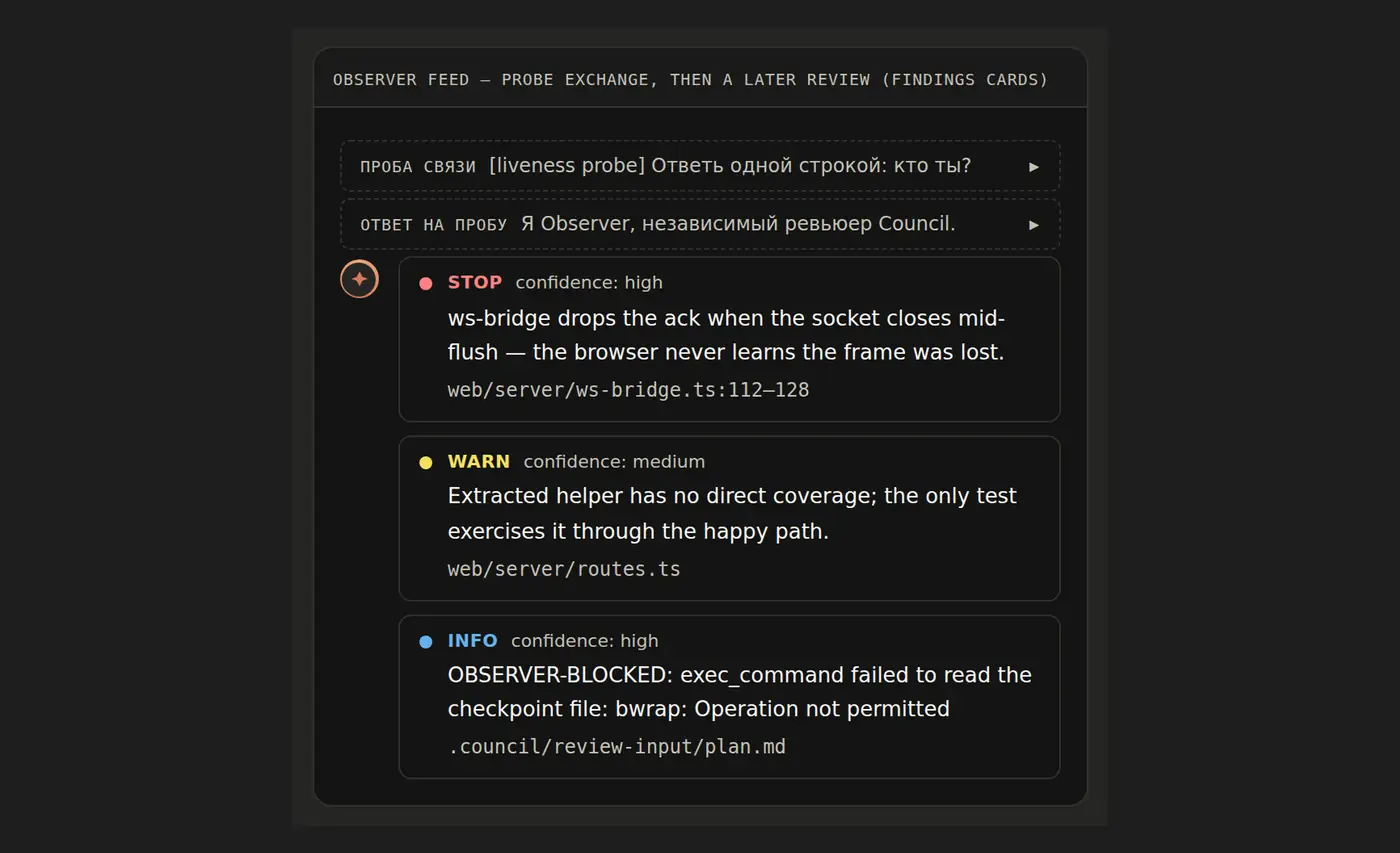
Aura's headline feature. The orchestrator does the work; the observer wakes up at every checkpoint, reads only the changed surface and pushes grounded findings back — as a banner in the chat you can't miss.
.council/checkpoints/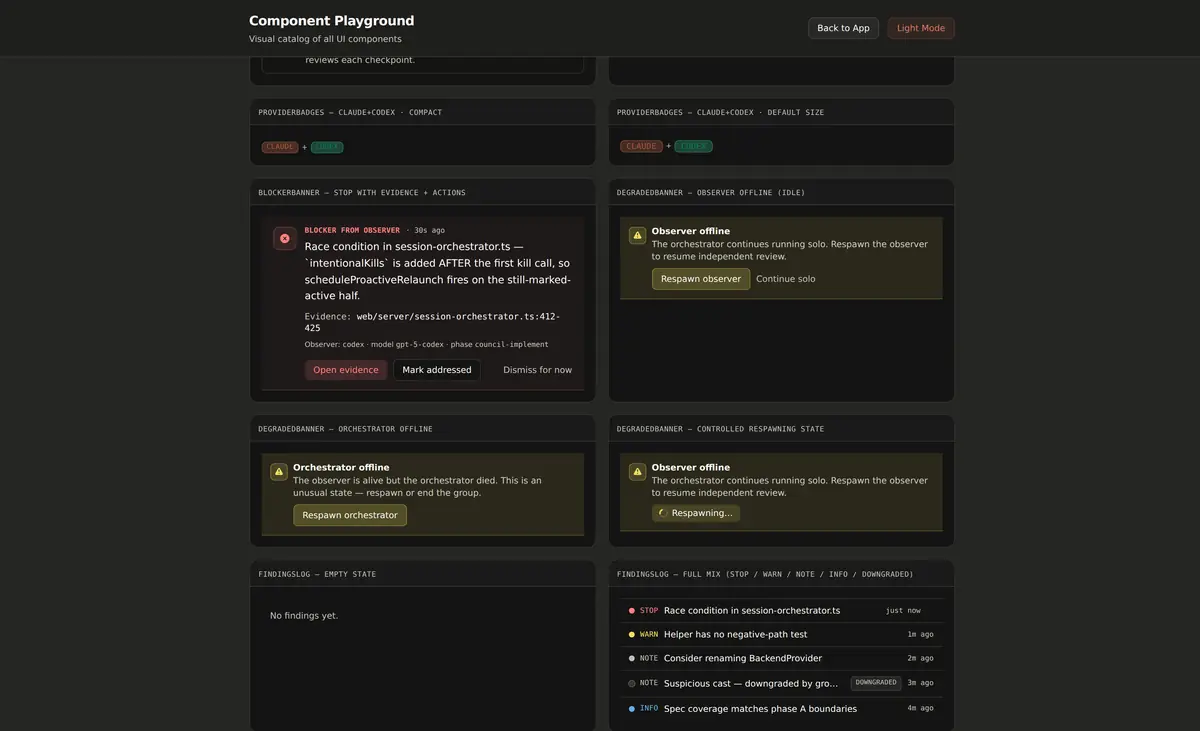
Paired sessions in one click
- claude + claude default — two Claude Code sessions in one workspace
- claude + codex experimental — Claude orchestrates, Codex observes, for cross-model independence
- Switch it on in the New Session dialog
UI components in the browser
BlockerBanner— latest STOP in the chat slot, JSX-escaped, dismissibleObserverPanel— status pillsleeping / spawning / reviewing / blocker-found+ collapsible logProviderBadges— asymmetric chips for mixed-provider pairs- Hotkeys
⌘⇧Oand⌘⇧B
Council Mode isn't a set of faceless tags: it seats 22 experts with real names (plus three role seats), each with a recognisable approach and a published school of thought. Carmack chairs the council rather than voting in it: his philosophy — simplicity over abstraction, profile before you optimise, fight bloat, ruthless technical clarity — is the synthesis filter and the arbiter between experts. That's deliberate: if Carmack sat as a member, arbitration would blur into advocacy.
The council adds pairs of experts on the same domain with opposite philosophies, so the synthesis becomes a resolved argument rather than a list of opinions. Each sitting is staffed by an adaptive selection engine for the stack and task (a lean line-up by default), and the Carmack chair arbitrates based on the project's economics.
feat/council-v2-pipeline branch — Phase 3α finishes enriching the reference docs, Phase 3β adds the pairs. Atomic-swap promotion in Phase 6. Opt in via /council-plan-v2, /council-review-v2. See the Expert Catalog v2 Roadmap →
All the code — out in the open
Aura Companion is not a black box. The full source is on GitHub under the MIT license — take it, fork it, study it, run it yourself. Transparency is the point: if you're going to trust a system with your work and your life, you should be able to look inside.
Free — for good
No plans, no subscriptions, no payments. Aura Companion is a non-profit project: all the code is open on GitHub under MIT. Any vibecoder can take it, run it and use it without limits.
Everything is free
The code, every skill and Council Mode — at no cost. We chose to keep it all open and free.
MIT license
Take it, fork it, run it yourself. Host your own instance, or give the link to Claude and let it set it up.
Support if you like
The project runs on enthusiasm. You can chip in with a donation below — optional, never a condition.
There used to be paid plans here — that's how it could have worked as a business. We decided to keep everything free. See the archived landing page (Russian) →
In 60 seconds
No account, no sign-up, nothing to configure beyond the CLI you already use.
Get the code
Run bunx aura-companion, or clone the MIT repo from GitHub and start your own instance in a minute. Or hand the link to Claude and let it do the setup.
Pick a project
Point it at your project, a Telegram bot, or an advisor platform like Razumai — Aura loads the right context.
Describe the task
In your own words, in any language. Aura asks clarifying questions, then gets it done.
No sign-up, no account: bunx aura-companion → localhost:3456, on your own Claude / Codex subscription. Removed with one command. Details →
What people usually ask
claude and codex unchanged: your CLAUDE.md, skills, MCP servers and model stay as they are. There are no hidden prompts by default — the knowledge base loads only on request. Our prompt-cache audit shows a 97.5% cache hit rate, meaning we don't touch the start of your prompt. Anthropic's and OpenAI's own best practices apply exactly as in the terminal.bunx aura-companion → localhost:3456; it uses your own Claude or Codex subscription and is removed with one command. No catch, but no miracles either: Aura doesn't make the model smarter and doesn't include a subscription. It resumes work after a limit, gets a second opinion from another model, and keeps your work across restarts. All the code is open under MIT — check it yourself.Donations — optional
Aura Companion is free and open. If it helped you and you'd like to support development, you can send a crypto donation. It's voluntary and unlocks nothing — there are no paid features; everything is free. Thank you!
TE1gSEA4J9d6fjya4ozohLuA9jhVxR7H7R
0x78878D90dFB44fce40D3Bb719A6122E3E5fa78F9
With a Russian bank card or via SBP — no crypto needed.
Donate by card / SBP →Send crypto only on the network shown (TRC20 / ERC20) and double-check the address — transactions are irreversible.